Most buyers scroll past the RERA number. It is the string of slashes at the bottom of the page that looks like a product code. It is actually the single most checkable thing on any project page, and it takes about four minutes to verify.
Decoding the string
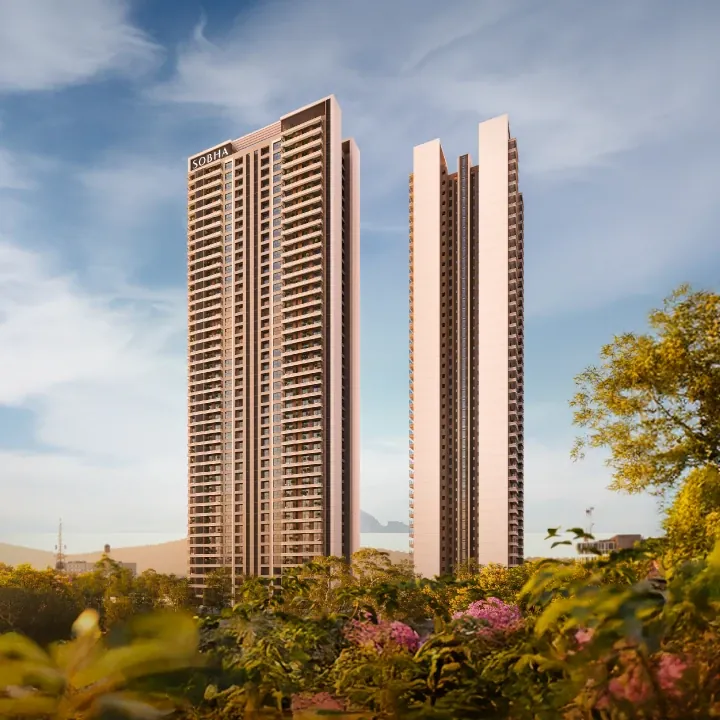
Take Sobha Crescent's registration:
RC/REP/HARERA/GGM/1054/786/2026/26 dated 03.04.2026
Reading left to right:
- RC/REP — registration certificate, real estate project
- HARERA — Haryana Real Estate Regulatory Authority
- GGM — the Gurugram bench
- 1054 / 786 — internal file and certificate numbers
- 2026 — year of registration
Uttar Pradesh formats differently. Sobha Rivana carries UPRERAPRJ313638/03/2026, where PRJ marks it as a project registration and the trailing numbers are month and year.
What to actually do with it
- Go to haryanarera.gov.in for Gurgaon projects or up-rera.in for Greater Noida.
- Search the registration number, not the project name. Names get reused and marketed differently; numbers do not.
- Check the registered completion date against whatever the brochure told you. These should match. When they do not, the portal is right.
- Open the quarterly progress updates. Promoters must file them. A project that stopped filing is telling you something.
- Check the promoter name on the certificate matches the entity you will be signing with.
The escrow rule, which is the one that protects your money
Under RERA, a promoter must park 70% of what buyers pay into a separate project-specific account, and may only withdraw against certified construction progress. The point is to stop money raised for one project funding land purchase for the next, which is the practice that stranded a generation of buyers before 2016.
Which is why the collection account number is published alongside the registration. Sobha Rivana's, for instance, appears with its UP RERA filing. Two things follow from that:
- Pay into the published collection account. Not a general company account, not anyone's personal account, not a "booking" account someone reads out over the phone.
- Check the account number matches the portal before the first transfer, not after.
It takes a minute and it is the single highest-value minute in the whole process.
What RERA does not do
This is where I think buyers over-trust the acronym. RERA registration is a disclosure and accountability regime. It is not a quality guarantee and not a price guarantee.
It does give you:
- A legally registered completion date, with penalties for delay
- Mandatory escrow of 70% of collections into a project-specific account
- Public quarterly progress filings
- A forum to complain to that is faster than civil court
It does not give you:
- Any opinion on construction quality or finish
- Protection from specification changes, since the promoter can revise those, and the Agreement for Sale annexure is what binds
- A view on whether the price is sensible
RERA tells you the promoter said something on the record. It does not tell you the thing they said was a good deal.
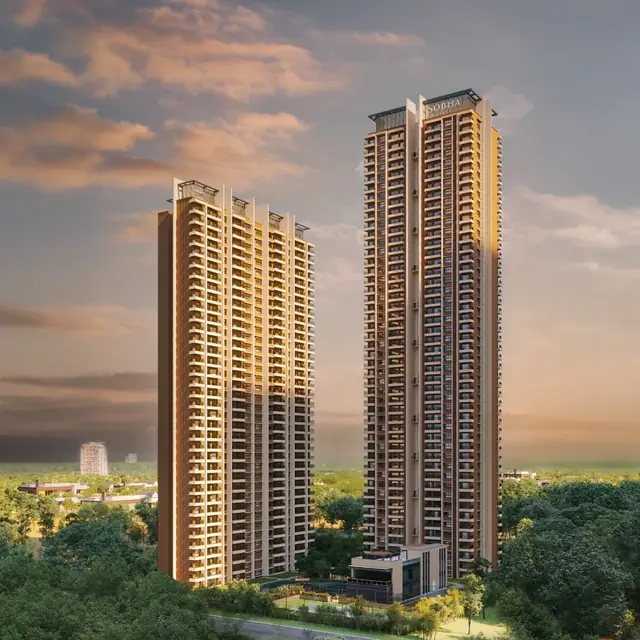
The registrations across Sobha's NCR projects
| Project | Authority | Registered |
|---|---|---|
| Sobha Crescent | HARERA Gurugram | 03.04.2026 |
| Sobha Altus | HARERA Gurugram | 27.05.2024 |
| Sobha Strada | HARERA Gurugram | 17.11.2025 |
| Sobha Aranya | HARERA Gurugram | 01.04.2024 |
| Sobha Rivana | UP RERA | 25.03.2026 |
| Sobha Aurum | UP RERA | 17.06.2025 |
Full numbers sit on each project page. Verify them yourself. That is rather the point of them being public.
A four-minute routine
- Copy the registration number from the project page.
- Paste it into the state portal's search.
- Compare the registered completion date with the one you were quoted.
- Open the latest quarterly progress filing and check it is recent.
- Note the collection account number for when you pay.
If any of those four steps produces a surprise, you have learned something worth more than the time it cost. If none of them does, you can stop worrying about this particular risk and go back to arguing about floor plans.