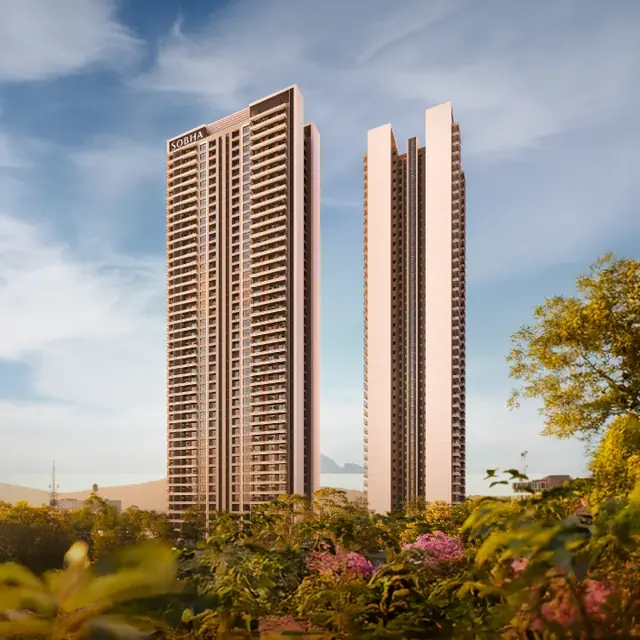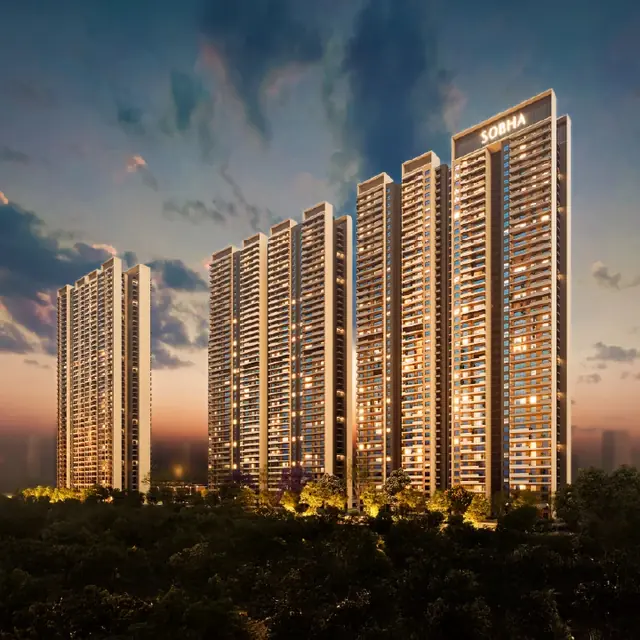

Sticker price gets the attention. The payment schedule decides whether you can actually afford the thing, and it is the part most people skim. Let me take the Sobha Aranya Tower 1 plan apart, because it is a clean example. One thing to be clear about up front: this schedule applies to Tower 1 only. The other towers at Aranya are staged differently.
The published schedule for Tower 1
| Stage | Share | When |
|---|---|---|
| EOI | ₹25 lakh | At booking |
| Instalments 1–4 | 30% | Within four months of allotment |
| Instalment 5 | 40% | Around 2029 |
| Instalment 6 | 30% | On offer of possession |
Possession is recorded for December 2030.
What an EOI actually is
An Expression of Interest is a pre-booking amount. You are reserving a position in the queue before formal allotment. Three things to establish before you transfer:
- Is it refundable, and on what terms? Get this in writing. "Refundable" and "adjustable" are not the same word.
- What does it convert into? It should become part of your booking amount on allotment, not sit as a separate fee.
- What happens if you are not allotted the unit you wanted? In an oversubscribed launch this is a real scenario.
Running the numbers on a 3 BHK
Tower 1 pricing is quoted on request, so to show the shape of the schedule I will run it against Aranya's published entry price of ₹7.10 Cr. Applying the stated percentages:
- At booking: ₹25 lakh
- Across the first four months: ~₹2.13 Cr (30%)
- Around 2029: ~₹2.84 Cr (40%)
- On possession: ~₹2.13 Cr (30%)
Indicative only. It applies the Tower 1 percentages to Aranya's published entry price to show the shape of the outflow, not to quote Tower 1. It also excludes GST, stamp duty, registration and any other statutory charge, which are substantial and not in that ₹7.10 Cr.
Notice the shape. Roughly a third lands in the first four months, and roughly a third does not land until the keys do. That back-loading is genuinely buyer-friendly, because the developer carries more of the build.
The 2029 instalment is the one to plan for
Forty per cent in a single call, three years out. If you are funding with a home loan, that is when most of your disbursement happens, and it is when your EMI steps up meaningfully.
Work out now what that EMI looks like against your 2029 income, not your 2026 income. And ask the lender how they treat a lumpy construction-linked schedule, because it affects sanction.
The instalment that breaks people is never the first one. It is the big one in year three, agreed to when it felt far away.
Questions worth asking out loud
- Is this construction-linked or time-linked? Construction-linked ties payment to milestones; time-linked does not, and is worse for you if the build slips.
- What is the penalty if I am late on an instalment?
- What does the developer pay me if they are late past the registered date?
- Is there a discount for a down-payment plan, and does it outweigh losing the staging?
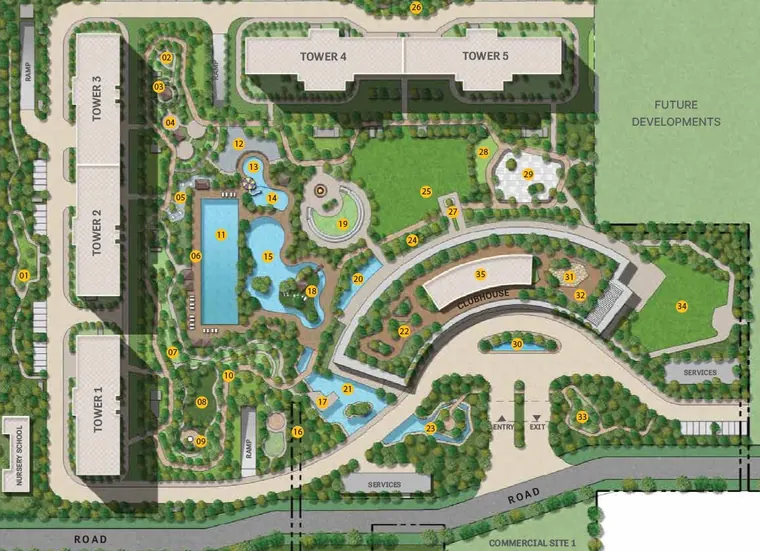
- Which tower is this schedule for? Do not assume it carries across the project.
- What are the full charges on top: GST, stamp duty, registration, maintenance deposit, parking, club membership, power backup?
That last one catches people. The headline price is rarely the cheque total. If you want to see how the quoted size relates to what you can actually use, that is a separate conversation about carpet area, and it changes the per-foot maths considerably.
Where the binding version lives
Everything above comes from the published schedule and is indicative. The one that governs you is the payment schedule set out in your Agreement for Sale. If the two differ, the Agreement wins. Read it before you sign, and if a clause reads oddly, pay a lawyer for an hour. It is the cheapest part of a ₹7 crore decision.